





Eye For Film >> Movies >> Elena Et Les Hommes (1956) Film Review



This later movie by the French master isn’t one of his finest efforts but the confident direction and cinematography exhibit traces of his earlier magic.
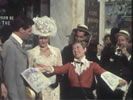
This often bizarre musical comedy – shot in glorious technicolour – is a love story mixed with politics and the tale is loosely inspired by the story of General Boulanger, who unsuccessfully tried to gain power in 1880s France.
He won the support of the people, who thought he would be most likely to avenge France’s defeat in the Franco-Prussian war. His Royalist backers hoped to use his popularity to bring down the Republic and stage a coup – but Boulanger went into exile with his mistress.
In Elena Et Les Hommes, Boulanger is brought to life in the form of the heroic General Rollan (Jean Marais), who falls for Polish princess Elena Sokorowska (Ingrid Bergman). She is then manipulated by politicians and persuades him to stage a coup.
Just as they wish him to become a dictator, he is dictated to by love – willing to do something he doesn’t believe in because Elena tells him to. Elena is not a power-mad political vixen but a woman simply trying to help someone reach their potential. Bergman makes her endearing and likeable. After all, we can’t have such a wholesome heroine such as Ingrid playing someone as crass as a woman prepared to prostitute herself!
Elena is only interested in men who need her. She is a muse and once they have achieved their goals, she abandons them. She sees her role as a helper and so shuns a man who truly loves her but does need anything from her, Henri (Mel Ferrer).
But will he win her over in the end and live happily ever after? Although there is a heavy political story, the film lightens the tone with plenty of music and comedy, particularly slapstick. In fact, the whole movie often borders on the ridiculous. It’s like Carry On Coup at times, largely thanks to the love triangle between Elena’s maid Lolette (Magali Noel), the General’s Aide Hector (Jean Richard) and another suitor Eugene (Jacques Jouanneau).
Eugene – who is engaged to an annoying, lovestruck debutante - chases her around Benny Hill-style and the two suitors engage in numerous foppish duels over her.
What really makes the film above average is the glorious cinematography. Renoir’s use of colour, costume and music is masterful, particularly in a scene depicting a Bastille Day celebration. The usually poised Bergman lets her hair down as she is whisked along by the fun-loving, joyous crowd. Elena escapes the shackles of how society expects her to behave. She sings, dances, gets drunk and falls in love. It truly is a gay Paris the Moulin Rouge would be proud of.
Reviewed on: 24 Jun 2007



Director: Jean Renoir
Writer: Jean Renoir, Jean Serge
Starring: Ingrid Bergman, Jean Marais, Mel Ferrer, Magali Noel, Pierre Bertin, Jacques Jouanneau, Jean Richard, Elina Labourdette
Year: 1956
Runtime: 98 minutes
BBFC: 
Country: France
Festivals:
Search database:
